Traffic devices
Barriers, marker posts, traffic cones.
24 signs
-
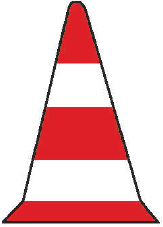 Z 1 Traffic cone Traffic cones placed in a row perform, depending on their position, the function of a solid longitudinal line or an edge line, including where they are placed on another longitudinal line. They may also mark out an area which must not be entered.
-
 Z 2 Road closure barrier The barrier is used chiefly to mark a full closure of the road or to fence off a work site.
-
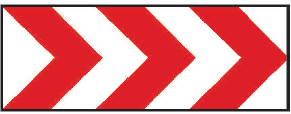 Z 3 Chevron board The chevron board marks chiefly a dangerous bend where the driver must considerably reduce speed, and directs traffic in the direction of the chevrons.
Where the bend needs special emphasis, the white may be replaced by fluorescent yellow-green.
-
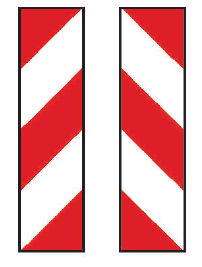 Z 4a Z 4b Directional board with oblique stripes sloping left Directional board with oblique stripes sloping right.
Directional boards with oblique stripes direct traffic in the direction of the slope of the stripes.
-
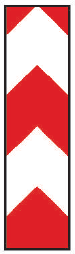 Z 4c Central directional board The central directional board directs traffic on both sides of the board.
-
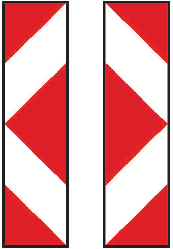 Z 4d Z 4e Directional board with an arrow to the left Directional board with an arrow to the right.
Directional boards with an arrow direct traffic in the direction of the arrow.
-
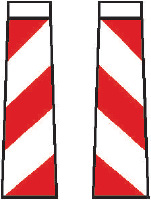 Z 5a Z 5b Guide board with oblique stripes sloping left Guide board with oblique stripes sloping right.
Guide boards direct traffic in the direction of the slope of the stripes.
-
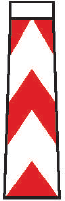 Z 5c Central guide board with oblique stripes The guide board directs traffic on both sides of the board.
-
 Z 5d Central guide board with horizontal stripes The guide board separates lanes and performs the function of a solid longitudinal line.
-
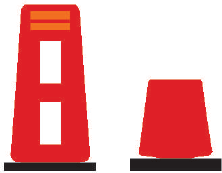 Z 6a Z 6b Large emphasis board Small emphasis board.
Emphasis boards highlight or replace a solid longitudinal line, usually of temporary road markings.
-
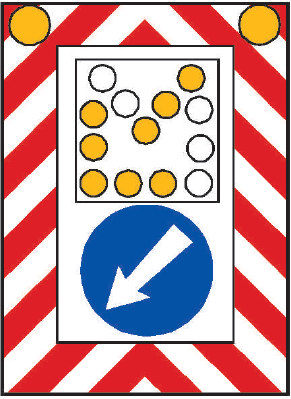 Z 7 Mobile lane closure board The board is used chiefly for the short-term marking of an obstruction to traffic, a lane closure, or a static or moving work site on the road.
It is used either upright or folded down.
-
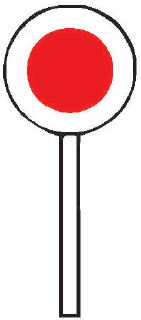 Z 8a Stop paddle for police officers A stop paddle for police officers.
-
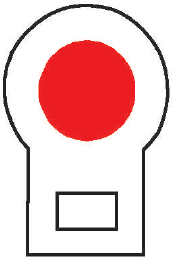 Z 8b Stop paddle for other authorised persons A stop paddle for other authorised persons.
-
 Z 8c Direction paddle A direction paddle.
-
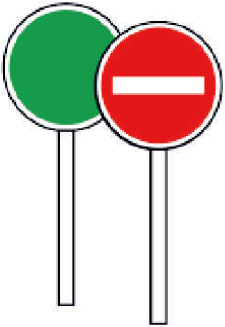 Z 8d Stop paddle for alternating one-way working The paddle is used to stop vehicles by a person authorised under Section 79(1)(i) of the Act, chiefly where two-way traffic runs in a single lane under temporary traffic regulation.
It is used so that the face bearing the symbol is turned towards the traffic being addressed.
-
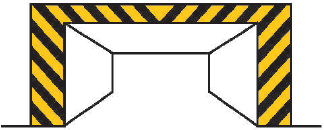 Z 9 Yellow and black stripes The stripes mark a permanent obstruction on the road.
-
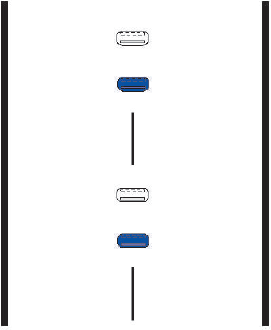 Z 10 Road studs The studs supplement or highlight road markings.
Studs supplementing a longitudinal line or an edge line are white. On bridges and sections with an increased risk of frequent icing, blue studs may also be used.
-
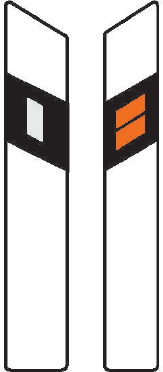 Z 11a Z 11b White marker post, left White marker post, right.
The posts mark the edge of the road.
-
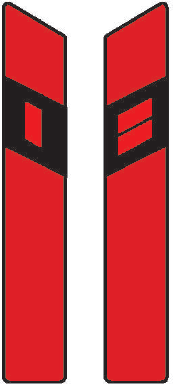 Z 11c Z 11d Red marker post, left Red marker post, right.
The posts mark the point where a service road joins another road.
-
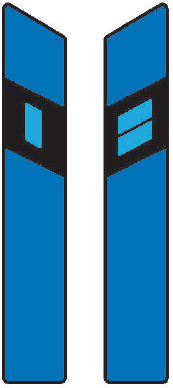 Z 11e Z 11f Blue marker post, left Blue marker post, right.
The posts mark a section of road with an increased risk of ice. In a reduced size they are also used on crash barriers and bridge parapets.
-
 Z 11g Round red marker post The post may be used in place of the left and right red marker posts to mark the point where a service road joins.
-
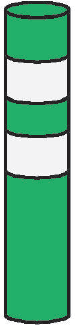 Z 11h Round green marker post (baliseta) The post is used to direct traffic and to emphasise a solid longitudinal line of the road markings.
-
 Z 12 Short transverse hump The hump creates a short artificial unevenness in the carriageway (a road hump) and is usually marked with yellow and black stripes.
-
 Z 13 Warning hump The hump, or a set of humps, creates an artificial unevenness warning of an approaching lane closure or of an obstruction on the carriageway or verge under temporary traffic regulation, and may be driven over where necessary.